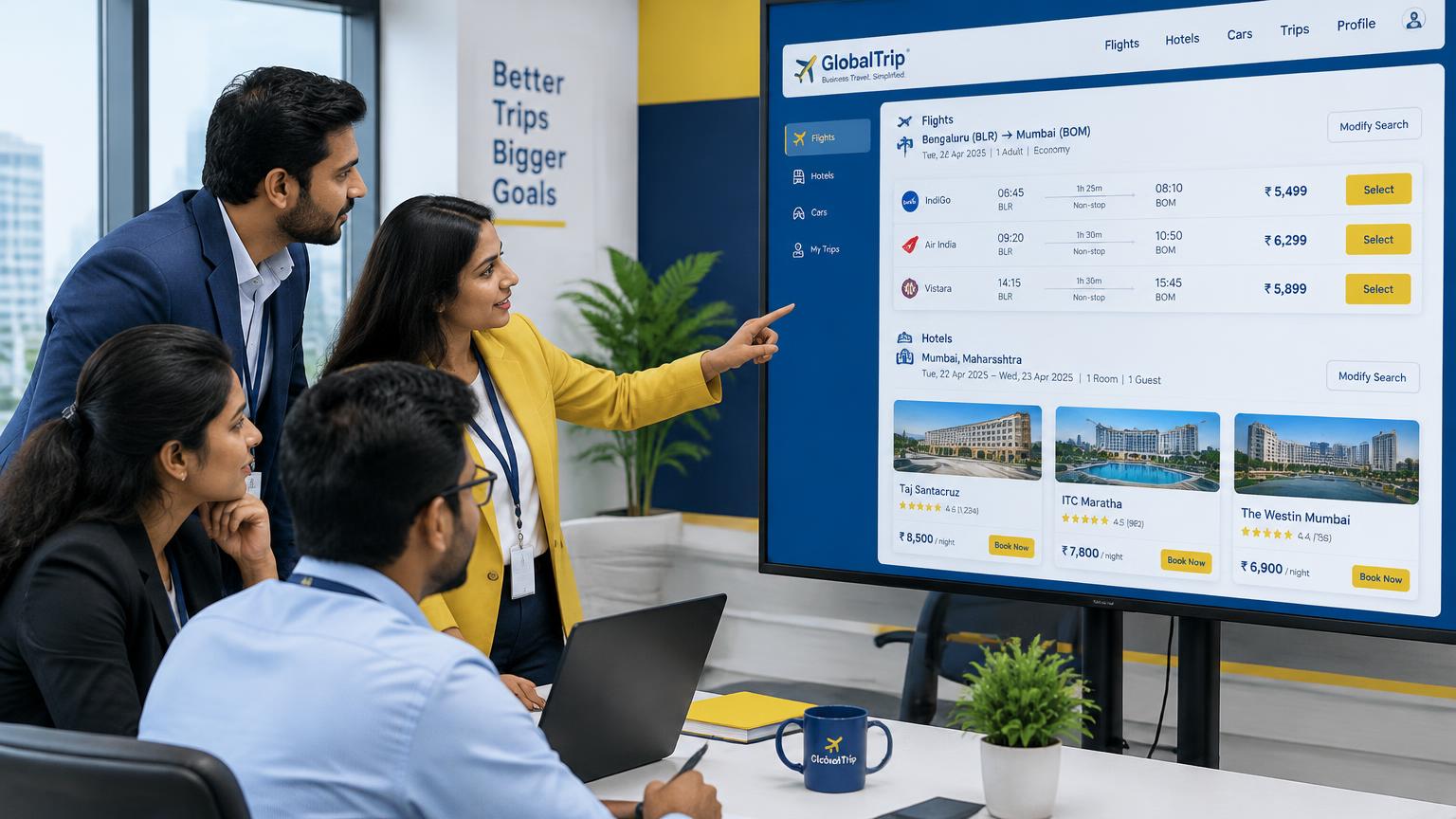
Why a Business Travel Platform Is Just as Important for Solopreneurs and Small Teams

You Don't Need 500 Employees to Need a Business Travel Platform
When people hear the term corporate travel management, they often imagine large organisations with hundreds of employees, dedicated travel desks, procurement teams and complicated approval structures.
But business travel isn't exclusive to large companies.
A founder travelling to meet an investor, a two-member sales team visiting a prospective client, a consultant flying to a project location or a startup attending an industry conference — all have business travel requirements.
And here's the problem: while these businesses may not have a dedicated travel department, they still face the same challenges as larger organisations.
Scattered bookings, unpredictable fares, time-consuming hotel searches, missing invoices, last-minute changes and limited visibility over travel expenses.
You may be a team of two, but your travel deserves a professional system.
Your team may be small. Your business ambitions aren't. Your travel infrastructure should grow with you.
1. Your Time Is More Valuable Than Managing Travel Bookings
For a solopreneur or startup founder, every hour matters.
Spending 45 minutes comparing flight options, checking hotel rates, coordinating with travel agents and following up on confirmations is time taken away from sales, customers, product development and business growth.
A business travel platform brings the booking process together.
You can:
- Search and compare flight options.
- Find hotels suited to your business destination.
- Keep bookings organised in one place.
- Access booking details without searching through old emails or WhatsApp conversations.
The objective is simple: spend less time managing travel and more time running your business.
2. Small Teams Need Cost Control Even More
Large companies may have procurement teams negotiating corporate travel contracts. Small businesses often don't have that advantage.
Every unnecessary expense affects the bottom line.
A structured business travel platform helps small teams make more informed decisions by giving them better visibility into flight and hotel options.
For example:
- Compare fares before making a booking.
- Set reasonable travel budgets.
- Identify expensive last-minute bookings.
- Review hotel costs across different destinations.
- Keep a record of business travel expenditure.
You don't need a large travel budget to need financial discipline. In fact, the smaller the business, the more important every rupee becomes.
3. Professional Travel Experience Builds Business Credibility
Imagine travelling to meet a potential investor, an important customer or a business partner.
You don't want to be dealing with a hotel confirmation issue, an inconvenient flight schedule or a last-minute booking problem.
A well-managed travel experience allows you to focus on the purpose of the trip.
Whether you're a solo consultant, a startup founder or a five-member sales team, professional travel arrangements contribute to a more organised business experience.
4. Your Business May Be Small, But Your Travel Requirements Aren't
A small team can have surprisingly diverse travel needs.
One employee may be travelling for a client meeting, another for a conference, while the founder may need to visit three cities in one week.
You may need:
- Domestic and international flight bookings.
- Hotels close to client offices or conference venues.
- Flexible booking options.
- Multiple traveller bookings.
- Support for cancellations and itinerary changes.
- Travel records for accounting and reconciliation.
Managing all of this through personal booking accounts, spreadsheets and WhatsApp messages quickly becomes inefficient.
A dedicated business travel platform gives these activities a common starting point.
5. You Don't Need a Travel Manager to Manage Business Travel
This is perhaps the biggest advantage for smaller businesses.
A business travel platform brings some of the structure of a corporate travel department into a digital interface.
Even without a dedicated administrator, a founder or office manager can have a more organised way to manage bookings.
As the business grows, the same structured approach can support more employees, more frequent trips and more complex travel requirements.
You can start small without having to change your entire process later.
6. Better Records Make Finance and Accounting Easier
Travel expenses are business expenses, and they need to be accounted for.
But when bookings are made through multiple personal accounts and travel agents, collecting invoices and matching payments can become a tedious exercise.
A structured booking process helps keep travel information easier to access and review.
This is particularly useful for:
- Tracking employee travel expenditure.
- Maintaining booking and invoice records.
- Reviewing trip-wise costs.
- Supporting accounting and tax documentation.
- Understanding how much the business spends on travel.
Your finance process should not become more complicated simply because your team travels.
7. Startups Should Build Good Systems Before They Scale
One of the common mistakes growing businesses make is introducing processes only when things become difficult to manage.
Travel is no different.
Today, you may have two employees travelling occasionally. Six months later, you could have a sales team operating across five cities.
Introducing a structured booking process early helps establish consistency.
It also avoids the need to move from informal booking arrangements to a completely new system as the organisation grows.
Good business systems aren't just for large companies. They help small companies become large companies.
So, Who Should Use a Business Travel Platform?
A dedicated business travel platform can be useful for:
| Business type | Typical travel requirement |
|---|---|
| Solopreneurs and consultants | Client meetings, projects and conferences |
| Early-stage startups | Founder travel, investor meetings and team visits |
| Small businesses | Sales meetings, vendor visits and employee travel |
| Growing SMEs | Frequent domestic travel and hotel bookings |
| Agencies and professional services firms | Client-site visits and project travel |
| Distributed teams | Team meetings, offsites and business events |
You don't need a minimum employee count or hundreds of bookings to benefit from a more organised travel process.
Meet Voyalys Edge: Business Travel Management Without the Enterprise Complexity
At Voyalys, we believe access to organised business travel shouldn't be limited to large corporations.
Voyalys Edge is designed to help businesses manage their corporate flight and hotel bookings through a dedicated online platform.
Whether you're a solo founder or managing a growing team, Edge helps bring business travel into a more structured booking experience.
With Voyalys Edge, businesses can explore:
- Corporate flight and hotel booking.
- A dedicated platform for business travel.
- Better visibility into travel bookings.
- A more organised approach to managing employee travel.
And when you need more than just a booking platform, Voyalys brings its wider travel and hospitality expertise to the table — including luxury travel and personalised hospitality solutions.
You Don't Have to Be a Large Company to Travel Like One.
Your business may have two employees today and twenty tomorrow.
Build the right systems early. Make business travel easier to manage, keep expenses visible and give your team a better travel experience.
Explore Voyalys Edge today.