Corporate Hotel Booking: How Businesses Can Improve Rates, Control and Visibility
Introduction
Hotel bookings are often one of the least standardised parts of corporate travel. Employees may choose properties based on personal familiarity, convenience or availability, while finance teams have limited visibility into nightly rates and booking patterns.
A structured corporate hotel booking process helps organisations balance price, location, traveller comfort and policy requirements.
Why corporate hotel booking needs a different approach
Business travellers have requirements that differ from leisure travellers. Location near an office, client site or conference venue can matter more than the lowest displayed rate. Flexible cancellation, reliable connectivity, early breakfast and safe transport may also be important.
The objective should be to select suitable value, not simply the cheapest room.
1. Set realistic hotel budgets
Hotel rates vary by city, season, weekday, local events and booking lead time. Consider city-specific or destination-category budgets and define how employees should request exceptions when rates exceed the guideline.
2. Build a preferred property list
Where employees travel repeatedly to the same cities, identify properties that offer a suitable combination of location, service, safety and price. Review the list periodically so it remains relevant.
3. Compare the full rate conditions
A displayed room rate may not tell the whole story. Check taxes, breakfast, cancellation deadlines, payment conditions, room occupancy and other inclusions before comparing options.
4. Make the booking channel easy to use
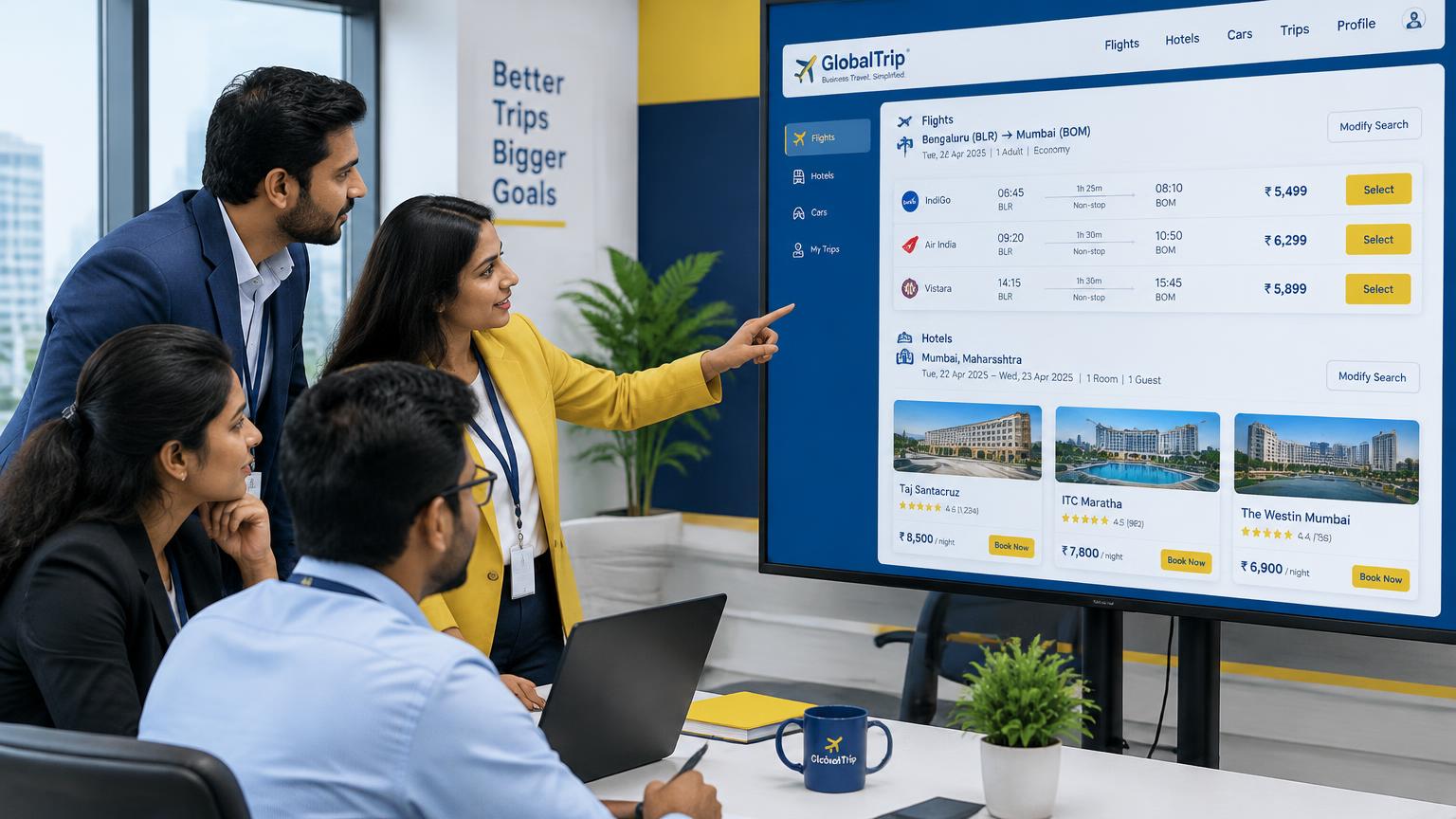
If the approved process is cumbersome, employees may book elsewhere. A central booking platform can make it easier to compare options and create a consistent record of reservations.
5. Track hotel spend by destination
Monitor average nightly rate, total room nights, booking lead time and policy exceptions. Compare similar dates and property categories to avoid drawing conclusions from unlike bookings.
6. Plan for peak dates
Conferences, exhibitions, holidays and major local events can reduce availability and increase rates. Where travel dates are known, encourage early planning and communicate expected constraints.
What should a corporate hotel booking platform offer?
Look for broad and relevant hotel inventory, clear rate conditions, corporate policy support, approval workflows, consolidated booking visibility, invoice documentation and accessible support. Validate actual inventory and service performance for the cities where your employees travel most.
Voyalys Edge and corporate hotel bookings
Voyalys Edge supports corporate flight and hotel booking through a dedicated business travel channel. Organisations can use a structured platform approach to improve booking visibility and align reservations with internal processes.
Frequently asked questions
Are corporate hotel rates always cheaper?
No. Corporate rates can be competitive, but the best option depends on destination, dates, room type, inclusions and cancellation terms. Compare the total value.
Should companies set one hotel budget for all cities?
Usually not. Hotel markets vary widely. City-specific or destination-category limits are generally more practical.
What is the most important hotel booking metric?
There is no single metric. Average nightly rate, total room nights, policy exceptions, cancellation costs and traveller feedback provide a more complete view.
How can companies reduce out-of-policy hotel bookings?
Make approved options easy to access, set realistic budgets, explain exception approvals and review why employees book outside the preferred channel.
Bring hotel bookings into one process
Explore Voyalys Edge for a more organised approach to corporate hotel and flight bookings.