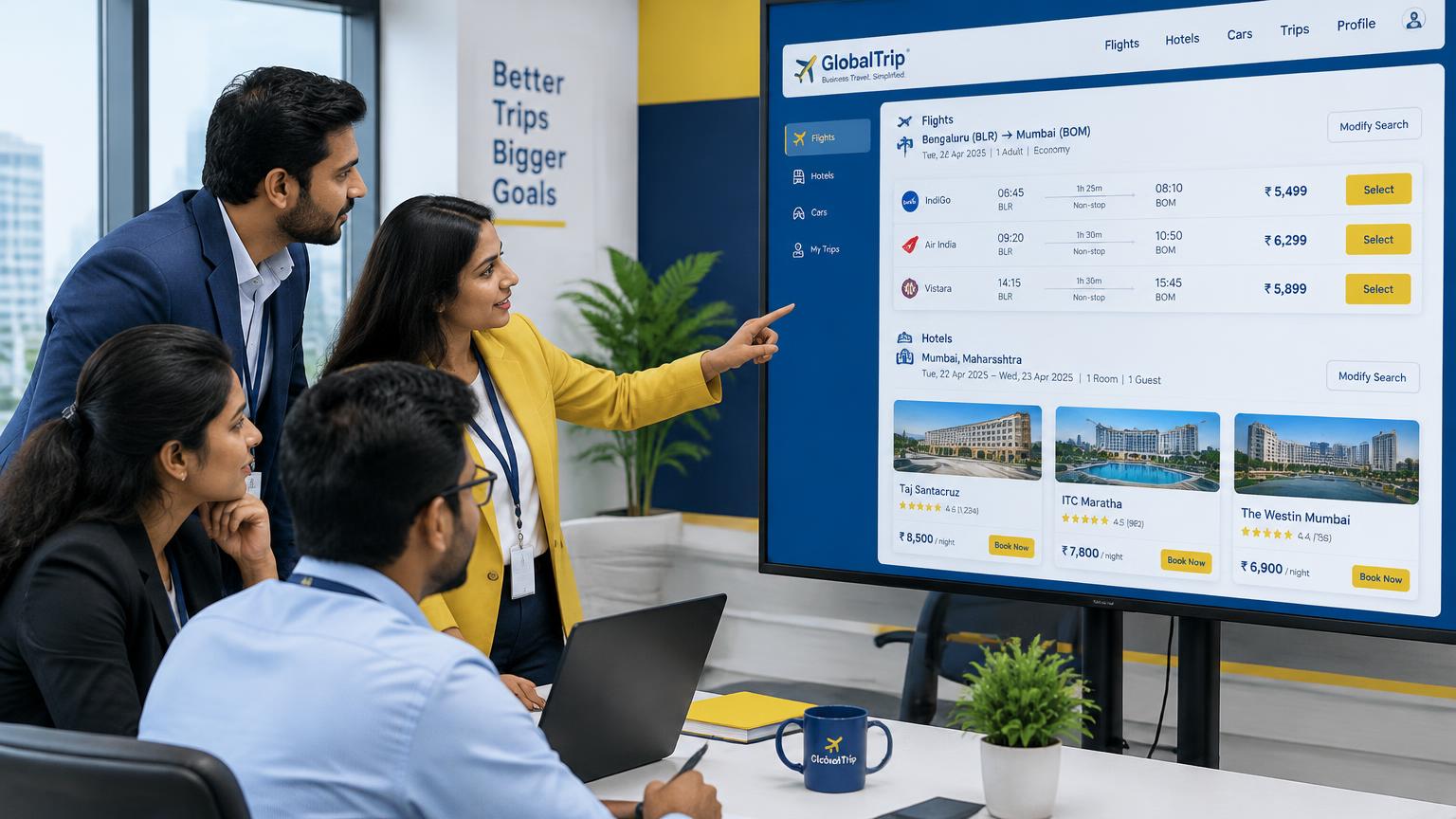
Why Employees Book Outside Company Travel Policy — and How to Reduce Policy Leakage

Introduction
A company may have a well-written travel policy and still find employees booking flights and hotels outside the approved process. This is commonly described as travel policy leakage.
Policy leakage creates more than a compliance issue. It can reduce visibility over total spend, make approvals harder to audit, fragment traveller support and complicate finance reconciliation.
The solution is rarely to add more restrictions alone. Organisations need to understand why employees bypass the process.
Why employees book outside policy
1. The approved process is inconvenient
If employees must email an administrator, wait for multiple options and follow up for approval, they may choose a faster alternative.
2. The policy does not reflect real travel needs
A hotel cap that is too low for a destination or a flight rule that ignores meeting schedules can make compliant options impractical.
3. Employees cannot see suitable options
If the approved channel has limited or unclear choices, employees may search elsewhere.
4. Approval delays create urgency
Slow approvals can turn a routine trip into a last-minute booking. The employee may book independently to protect the business schedule.
5. Rules are unclear
Employees may not know which expenses are permitted, when approval is needed or how to request an exception.
How to reduce policy leakage
1. Map the current booking journey
Document how employees request, approve, book and amend travel. Identify where delays and repeated manual steps occur.
2. Make the compliant route the easiest route
Give employees a clear booking channel with relevant flight and hotel options. Reduce unnecessary hand-offs and duplicate data entry.
3. Set realistic policy limits
Use travel data to review budgets by city, route, role and trip type. Make exceptions possible when there is a legitimate business reason.
4. Simplify approvals
Use approval levels that reflect the risk and cost of the booking. Avoid sending every low-value request through a long chain.
5. Explain the policy in plain language
Provide examples of compliant bookings, common exceptions and the process for urgent travel.
6. Measure leakage
Track bookings made outside the approved channel, policy exceptions, approval turnaround time and reasons for non-compliance. Use the data to fix process problems.
A useful distinction: policy violation or process failure?
Not every out-of-policy booking is deliberate non-compliance. If employees repeatedly bypass the same step, investigate whether the process is too slow, inventory is inadequate or the policy is unrealistic. Treating every exception as misconduct can hide the underlying issue.
How Voyalys Edge can support compliance
Voyalys Edge provides a dedicated corporate channel for flight and hotel bookings. A defined platform workflow can help employees access the booking process and give administrators greater visibility. The effectiveness of policy controls depends on the rules configured and the organisation's operating process.
Frequently asked questions
What is travel policy leakage?
It refers to business travel bookings made outside an organisation's approved booking channel or policy requirements.
How do you calculate policy leakage?
A company can compare bookings made outside the approved channel with total business travel bookings or spend. Define the measurement consistently and ensure the data sources are complete.
Should employees be penalised for every out-of-policy booking?
Not automatically. Review the reason, urgency and available compliant options. Repeated or unjustified violations can be handled under internal policy.
What is the fastest way to improve compliance?
Start by identifying the biggest friction point in the booking journey. Making the approved process faster and more usable often has a direct impact on adoption.
Reduce leakage by fixing the process
Explore Voyalys Edge and build a more visible, employee-friendly corporate booking workflow.