Travel Management Company vs Online Booking Platform: What Should Businesses Choose?
Introduction
Businesses evaluating corporate travel solutions often compare a traditional travel management company (TMC) with an online booking platform. The two models solve overlapping but not identical problems.
A TMC typically provides people-led travel services and support. A corporate booking platform provides a digital workflow for employees and administrators. The right choice depends on travel volume, complexity, internal resources and the level of control required.
What does a travel management company do?
A TMC may support flight and hotel reservations, itinerary planning, changes, cancellations, group travel, traveller assistance and account management. Service models differ, so businesses should confirm what is included in the agreement and what attracts additional fees.
What does a corporate booking platform do?
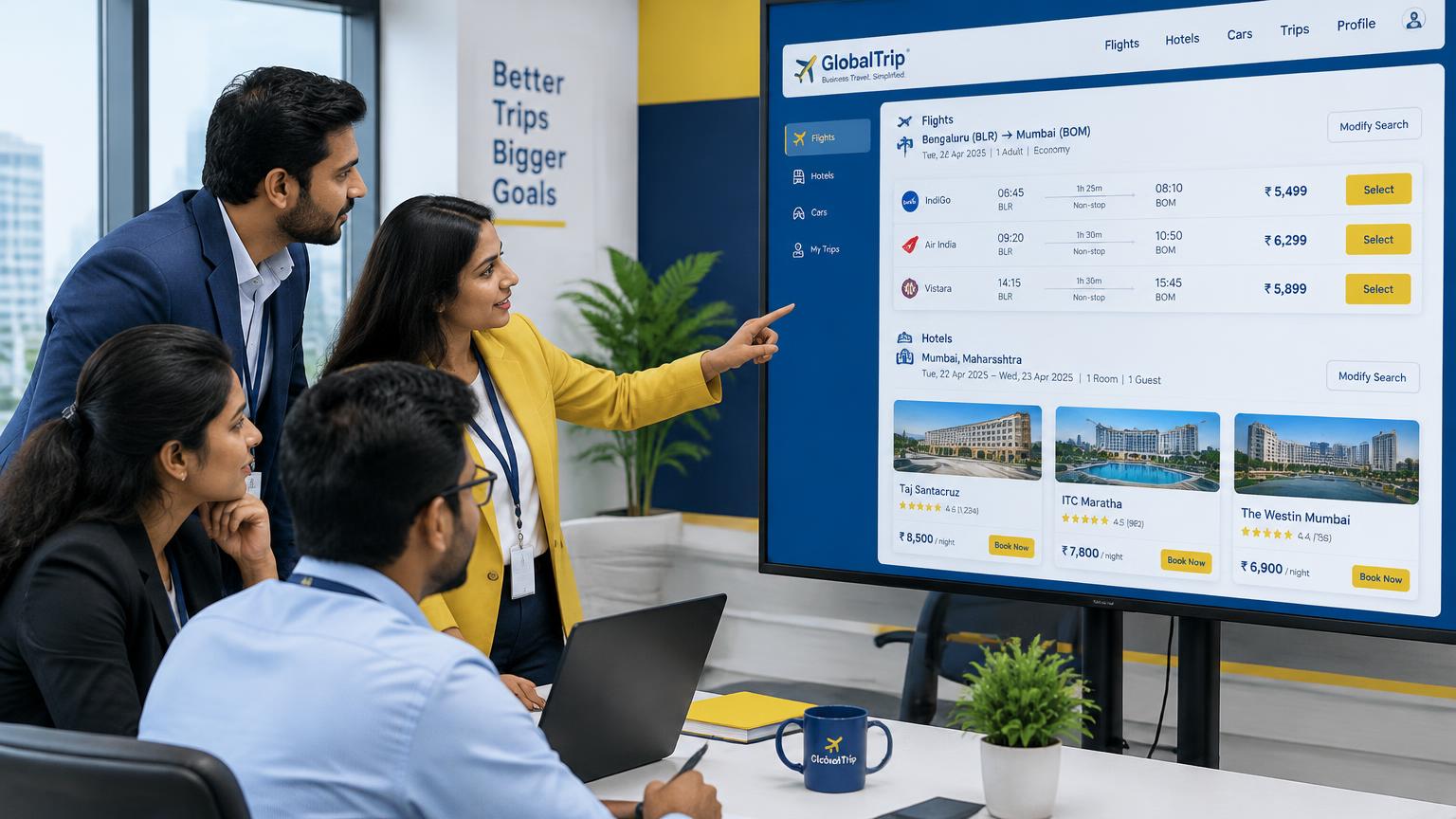
A corporate booking platform gives employees a digital interface to search and book travel. Business-specific features may include:
- Employee and traveller profiles
- Travel policy rules
- Approval workflows
- Central booking visibility
- Reporting and analytics
- Invoice and documentation access
- Support for amendments and disruptions, depending on the provider
Key differences
| Area | Traditional TMC model | Corporate booking platform |
|---|---|---|
| Booking experience | Often consultant-led | Primarily self-service |
| Policy controls | May rely on account processes | Can be configured in the platform |
| Approvals | Email or account workflow may be used | May be integrated into booking workflow |
| Reporting | Depends on provider and systems | Often available through dashboards or exports |
| Complex itineraries | Consultant support can be valuable | May require assisted servicing |
| Employee adoption | Depends on service responsiveness | Depends on usability and inventory |
These are general distinctions, not universal rules. Many TMCs offer technology, and many platforms provide human support.
Questions to ask before choosing
- How frequently do employees travel?
- How many bookings are simple point-to-point trips versus complex itineraries?
- Does the organisation need pre-booking approvals?
- How important is self-service for employees?
- What level of after-hours support is required?
- What reporting does finance need?
- How are changes, cancellations and refunds handled?
- What are the full commercial terms, including service fees?
Why a hybrid model can work
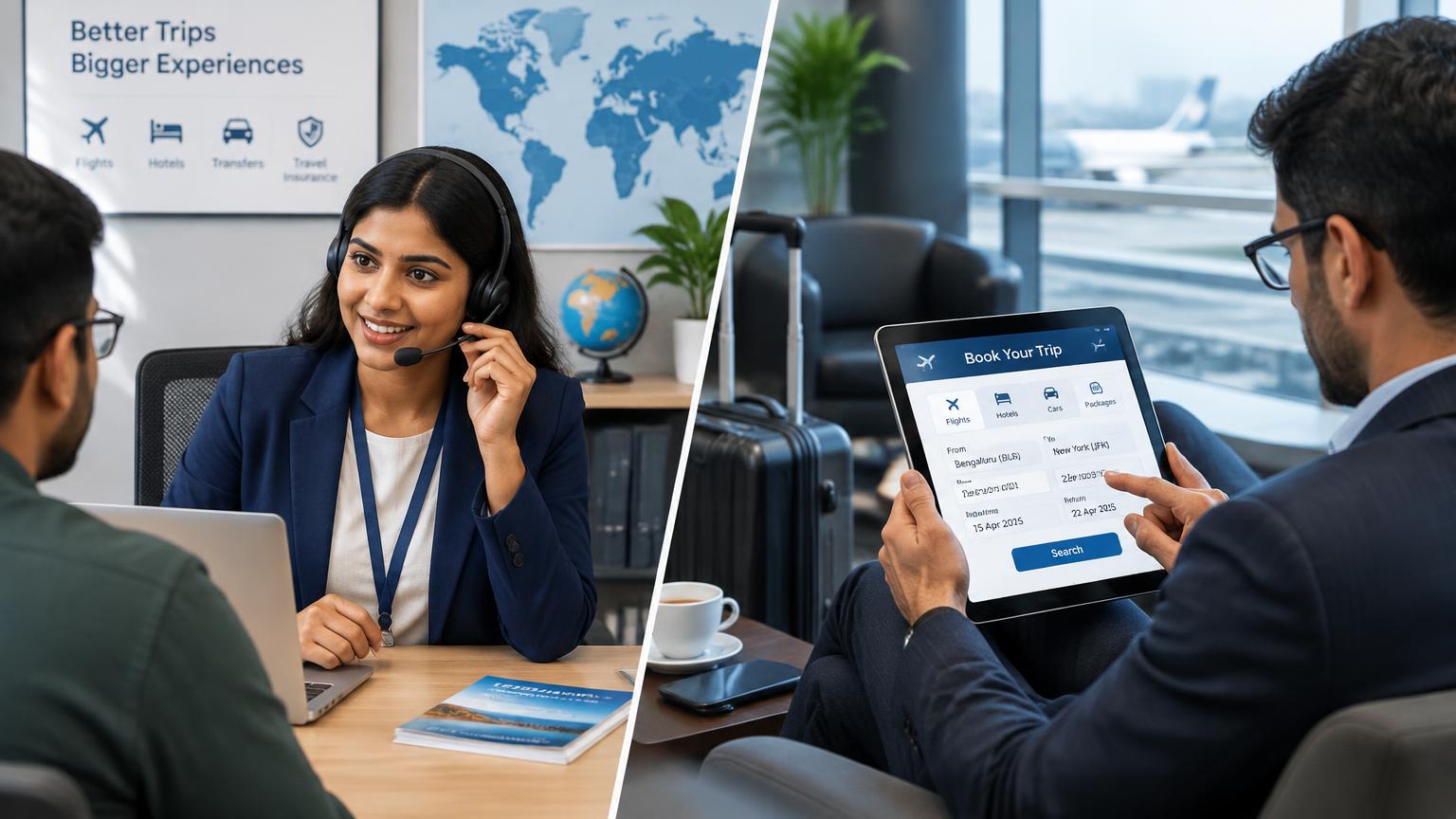
For many businesses, the most effective approach combines self-service technology for routine bookings with human support for complex requirements and disruptions. This avoids making every simple booking dependent on a consultant while preserving assistance when it matters.
Where Voyalys Edge fits
Voyalys Edge is Voyalys' corporate travel booking platform for flight and hotel requirements. It is designed to provide a dedicated digital booking channel, supported by Voyalys' travel and hospitality experience. Organisations should assess the platform's available inventory, approval configuration, reporting and servicing model against their requirements.
Frequently asked questions
Is a TMC better than an online booking platform?
Neither is automatically better. A TMC may suit businesses that need extensive assisted servicing. A platform may suit businesses seeking employee self-service, policy workflows and central visibility. Some organisations need both.
Can a corporate booking platform handle complex travel?
Capabilities vary. Confirm how the provider handles multi-city itineraries, group travel, disruptions and urgent changes.
Do online booking platforms provide human support?
Some do, but support hours, channels and service scope vary. Ask for the details in writing.
What should companies compare commercially?
Compare transaction fees, management fees, implementation costs, cancellation and amendment charges, payment terms and the scope of included support.
Choose the operating model that fits your travel programme
Explore Voyalys Edge and assess how a digital booking workflow can complement your organisation's travel operations.